
Page two of your pre-read was headed “Confidence starts long before implementation“. Nobody got to page two.
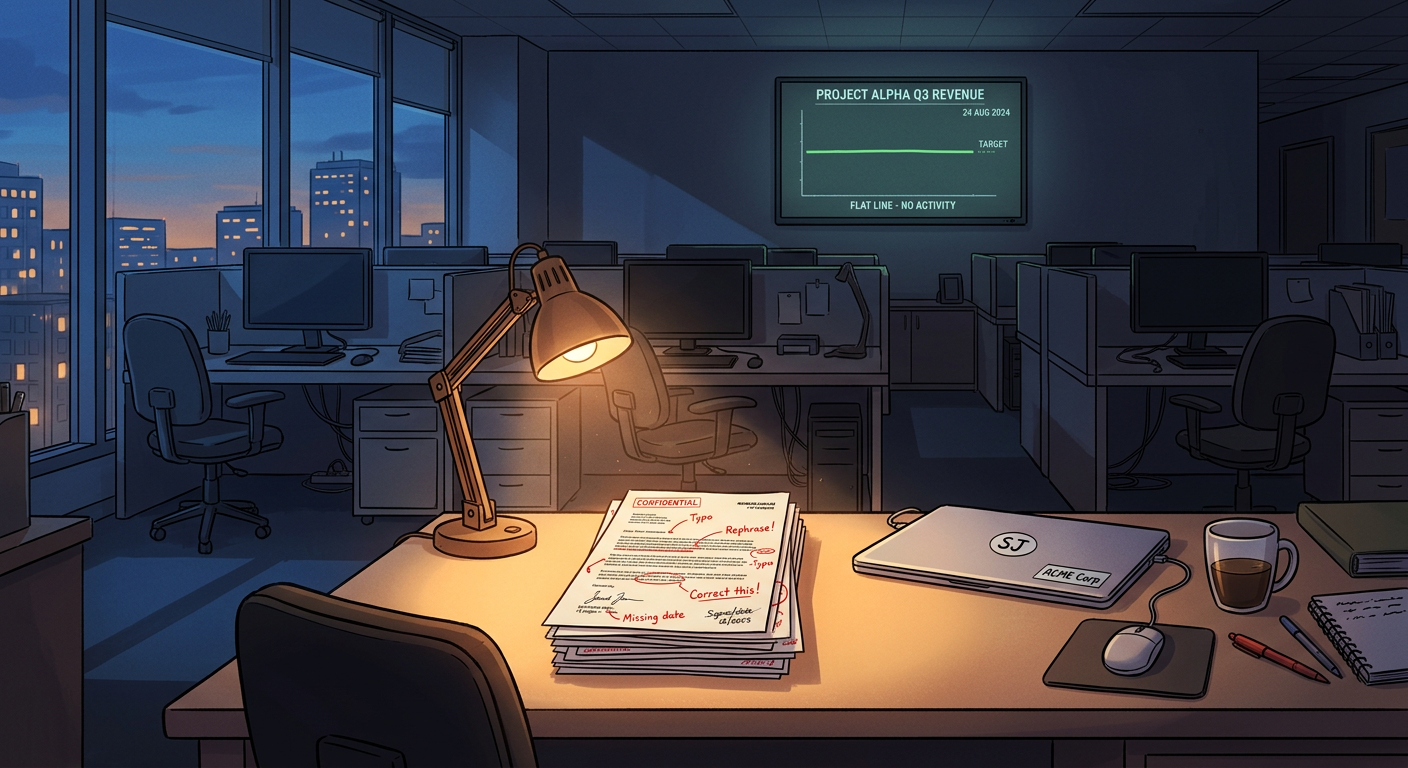
It’s Thursday, the leadership meeting, and the adoption dashboard is up on the big screen. Usage in claims is flat. Eleven weeks after go-live, flat. The CFO asks what each licence costs per active user, and nobody wants to do that sum out loud. Then the COO says it again, adds that people need to get on board, and every head in the room turns a fraction towards you. Culture is yours. So the flat line is yours too.
You came in with a theory. You leave with an action in the minutes: “HR to address adoption blockers.” Your name beside it. Those minutes go into the board pack in three weeks.
So, the blunt version. Your most experienced people have quietly stopped trusting the rollout, and the leadership team has decided that’s an HR problem.
This one’s for HR and OD directors in mid-size UK organisations who’ve been handed the “resistance” action for an AI rollout they didn’t design, and who need to walk back into that room with something firmer than a hunch.
You know things the room doesn’t.
Margaret has run the claims team for nineteen years. She can read a loss adjuster’s report and point to the line that’s going to cost the business money. Since go-live, her Teams status has said “in a meeting” every afternoon. There is no meeting. You checked her calendar once, then felt grubby for checking.
Her team are using the tool, sort of. They paste its draft letters into Word, then rewrite them against the old template that still lives on the shared drive. Someone has started a spreadsheet of the tool’s mistakes. It’s called “the howlers” and it gets passed round like contraband. None of this reaches the project retro. The retro says “strong attendance at training”, which is true. People turned up, sat at the back and said nothing.
Then last week a handler six months into the job asked Margaret a question in the open-plan. “Ask the robot,” she said. “Apparently it knows.” Everyone laughed. You didn’t.
Margaret is a composite. If you’ve worked in HR or OD for any length of time, you’ve met her.
I’ll say it plainly, and you can argue. When a leadership team says “resistance”, it usually means they skipped the part where anyone asked what the tool would do to the people expected to use it. The word puts the problem inside Margaret’s head. Handy, because then it isn’t on the project plan.
Margaret isn’t resisting a tool. She’s protecting the thing that made her worth listening to for nineteen years, and nobody has told her what that’s worth now.
I spent over a decade in the British Army, including three tours of Bosnia. Nobody there trusted kit because a briefing said it worked. You trusted a radio because you’d seen it work in the wet, and because you knew what the people next to you would do when it didn’t. That confidence got built at the kit check and the rehearsal, in the questions asked before anyone moved. By the time you were on the ground, it was there or it wasn’t.
Confidence starts long before implementation. Margaret’s was decided in a steering group she wasn’t invited to, about a process she knows better than anyone in it.
It isn’t only a claims problem either. Klarna’s chief executive has said publicly that the company leaned too hard on AI in customer service and let quality slip, and that it would hire people again so customers can always reach a human. A business that loud about its tool, walking it back in public. Notice what nobody in that story blamed. Not staff attitude. The story was about decisions made above them.
Here’s where you stop sounding like HR fluff. Don’t take “identity threat” into Thursday’s meeting. You’ll be right, and you’ll lose. Take the operational version instead.
Decision authority: who signs off a claim letter now, the handler or the tool? If nobody can answer in one sentence, Margaret checking everything herself is the only rational move she has. Trust calibration: does anyone on the leadership team know which letters the tool gets right and which it fumbles? Margaret’s team do. It’s in the howlers spreadsheet. That’s not apathy. That’s an unofficial quality log, kept by the people with the most to lose.
I run my own business. I know what a licence line looks like on the P&L when nobody’s using what you paid for. A COO hears that sentence. He doesn’t hear “morale”.
Run the scene again, differently. Before go-live, someone sits down with Margerat and asks which letters she’d never let a new starter send unchecked. Her answer becomes the rule. The tool drafts, a senior signs those ones off, and Margaret’s name sits on the standard. The howlers spreadsheet becomes the official error log, owned by her team, reviewed every fortnight.
Her status goes back to available. Not because anyone won her over. Because she’s in charge of something again. The junior gets a proper answer to their question, and the dashboard in claims starts to move for reasons the COO can follow.
That’s the work I do. Elvorta’s 90-minute HORIZON diagnostic gives a leadership team a red, amber and green read on where the human side of their AI rollout is breaking, a ranked list of what to fix first, and a named owner for each fix. You walk into Thursday with one page the COO can’t call fluff, because it’s written in owners, not feelings. And the “resistance” action stops sitting next to your name alone.
So here’s my ask. I’m looking for five HR or OD directors in mid-size UK organisations who’ve got “resistance” minuted against their name and a Margaret they’re quietly worried about. DM me here or email info@elvorta.com and we’ll book a 30-minute clarity call. I reply within one working day. If it isn’t a fit, I’ll tell you straight.
The tool was never the problem. The system around it was, and you’re the person in that building best placed to say so with a straight face.
If you asked your most experienced person tomorrow what the rollout has cost them, what would they say, and would they say it to you?