
Klarna went all-in on AI-alone customer service. Then, quietly, without a press release, it started hiring humans back in. The quality of the conversations was sliding. Nobody drew a line before someone flipped that switch. They just hoped it would hold.
It’s not the only one. Commonwealth Bank cut dozens of customer service jobs for voice bots. Call volumes went up instead of down, so the bank reversed course. Ford brought back over 350 engineers. The automated quality checks couldn’t hold what those people actually knew the stuff that never made it into a manual. IBM had AI handling roughly 94% of routine HR requests. That’s a number worth putting in a slide deck. But the remaining sliver the ethical judgement calls, the messy human ones still needed a person with real authority to decide. So IBM is tripling entry-level hiring.
Read those four stories together and a pattern shows up that has nothing to do with the technology. Every one of those organisations picked a side AI-alone or human-alone. They picked it fast, under pressure, without deciding on purpose. Nobody sat in a room and agreed the split. This decision belongs to the machine. That one stays human. This one needs both of you watching it at once. They just moved, and the market corrected them in public.
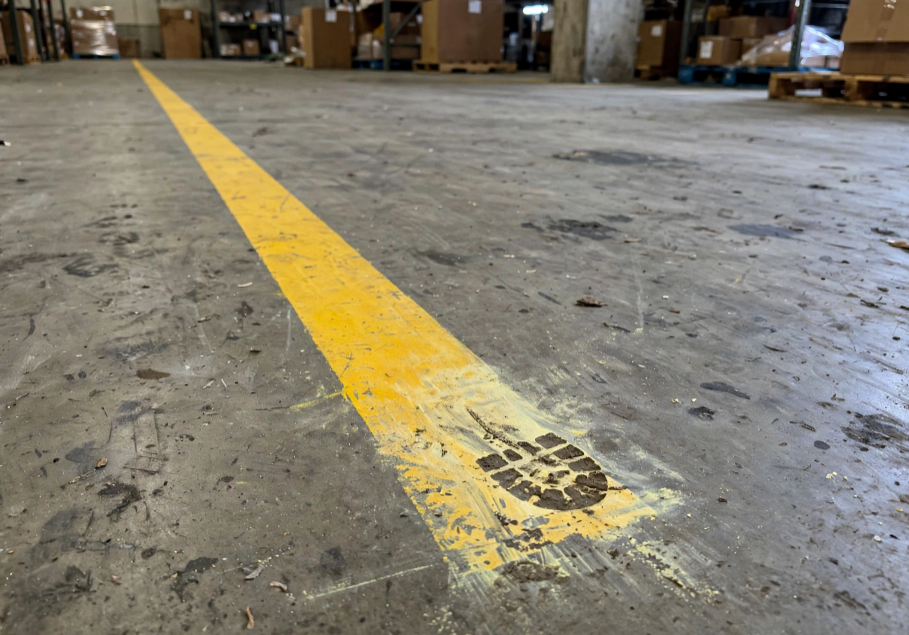
That’s the line nobody’s drawn. Not AI versus humans that fight is mostly noise. The actual question sitting underneath every stalled transformation programme is much smaller and much harder. For this specific decision, right here: who’s actually in charge? Does everyone in the room agree, or are they just nodding?
I’ll be honest, I’ve got this wrong myself. Early on, running my own business, I let a scheduling tool make calls it had no business making. Not because the tool was bad. Because I never told it, or myself, where its authority ended. It ran quietly wrong for weeks. Nobody flagged it because I never told anyone whose job it was to flag it. That’s the whole problem in miniature.
You already know the version of this that keeps you up. It’s the programme that looked fine in the steering committee deck for three months running. Then it just stopped delivering. Nobody can tell you why, not in language that isn’t a euphemism. You ask what changed and you get “adoption is still ramping.” Ask again in a smaller room and you get closer to the truth. People stopped trusting it, so they started working around it. Nobody wrote that in the retro notes admitting it felt like admitting the programme had failed on your watch.
You’ve probably already seen the actual mechanism. You’re the one close enough to the floor to notice the workaround. There’s a shadow spreadsheet still running behind the new system. The team quietly reverts to the old process every Friday, because the new one falls over under real volume. You’ve raised it. More than once. It keeps landing as an adoption problem, a training problem, a change-management problem. What you’re actually describing is a decision nobody made: who’s accountable when the system gets it wrong. Fighting to get that heard is its own kind of exhausting, because you’re not wrong, you’re just early.
You’re the one holding what’s left after the line gets crossed badly. You’re in the room when someone finally admits, quietly, that they don’t trust the new system. You watch the silence that follows. Nobody else in that meeting wants to be the one to agree out loud. Later, you’re the one explaining why engagement dropped in the exact team that got the AI rollout first. That’s not a communications problem. People who were confident and capable in the old way of working suddenly feel like they don’t know how to be good at their job. Nobody told them clearly what “good” looks like now.
You’re the one standing in the gap, and it’s a lonely place to stand. The strategy slide says integrated, human-in-the-loop, augmented decision-making. What’s actually happening on the ground is different. A team is quietly deciding, without telling anyone, which parts of the new system they trust and which parts they route around. You know the gap exists because you’re the one translating between the two languages every week. You know something else too. Say the quiet part out loud that nobody’s actually decided who owns what and it sounds like you’ve failed to deliver. Really, you’re the only one who’s noticed the thing was never designed properly in the first place.
Here’s where the military service comes in and I promise this isn’t a war story dressed up as a lesson. In the field, ambiguous command isn’t an inconvenience. It’s the difference between a unit that moves together and one that freezes, or worse, splits and acts on its own read of the situation. Everyone needs to know, cold, who owns the call in this exact moment. Not in general. In this moment. When that’s unclear, good people don’t do nothing. They do something, based on their own judgement. You find out what they decided after the fact, usually when it’s already gone wrong. Put that same ambiguity in a call centre or a claims team and you get exactly what Commonwealth Bank got. People make the best call they can with no clear brief. The aggregate result shows up as a spike nobody can explain from the dashboard.
The commercial argument for drawing this line properly isn’t complicated, even without reaching for invented statistics to make the point. Every one of the companies above is now paying twice. First to build the automation. Then to rehire, retrain, and repair the trust they burned while nobody was watching. That’s not a technology cost. That’s the cost of a decision nobody made on purpose it just defaulted.
A bigger rollout plan won’t fix this. Neither will a better dashboard. You fix it the unglamorous way decision by decision. Name out loud which ones the machine owns outright, which stay fully human, and which genuinely need both of you in the room before anything moves. That’s slower than flipping a switch. It’s also the only version that doesn’t end with your organisation’s name in a headline about quietly hiring people back.
Nobody’s coming to draw this line for you. It won’t show up in a vendor’s implementation plan. “Monitoring adoption closely” won’t create it either. Leaders create it by saying, in the room, out loud: this one’s ours, that one’s the system’s. Here’s how we’ll know if we got it wrong.
So pick one decision in your organisation that’s live right now. Not hypothetical. Live. Could you tell me, with a straight face, if it’s the person or the system actually in charge of it? And if you can’t answer in under ten seconds, what does that tell you about how you built it?